What is brand identity? A step-by-step guide for small businesses
Last updated: April 2026
Most small businesses have some version of a brand. A logo someone made, a colour that showed up on the first flyer, a font that became the default. What they rarely have is a brand identity: a deliberate, considered system that communicates who the business is, what it stands for, and why it's the right choice for the right person.
That distinction matters more than most small business owners realise. A logo is a mark. A brand identity is everything that mark exists within. And in a market where the quality of your work is increasingly hard to communicate at a glance, the business that looks more credible, more considered, and more consistent tends to win, regardless of whether their work is actually better.
This guide explains what brand identity is, what it includes, and how to build one that does what it's supposed to.
What is brand identity?
Brand identity is the full system of visual and verbal elements that defines how your business looks, sounds, and feels to the people it's trying to reach. It goes beyond the logo and encompasses everything from the colours you use and the fonts you choose to the way you write a caption and the tone you use in a proposal.
Done well, brand identity does three things simultaneously. It tells your audience who you are. It signals what kind of experience they can expect. And it builds consistency across every touchpoint, so whether someone finds you on Instagram, visits your website, or receives a quote, they encounter the same business, not three slightly different versions of it.
If you're wondering whether your current brand is still doing this job, this article on the signs your brand has outgrown your business is worth reading.

What does brand identity include?
Brand identity is not one thing. It's a connected set of elements that work together to create a coherent impression. For a small business, those elements typically include the following.
Logo
Your logo is the most visible part of your brand identity but it's not the most important. Its job is to be recognisable, scalable, and versatile enough to work across different contexts, from a business card to an Instagram profile to a van. A logo that only works in one format or at one size is a logo that hasn't been built properly.
Colour palette
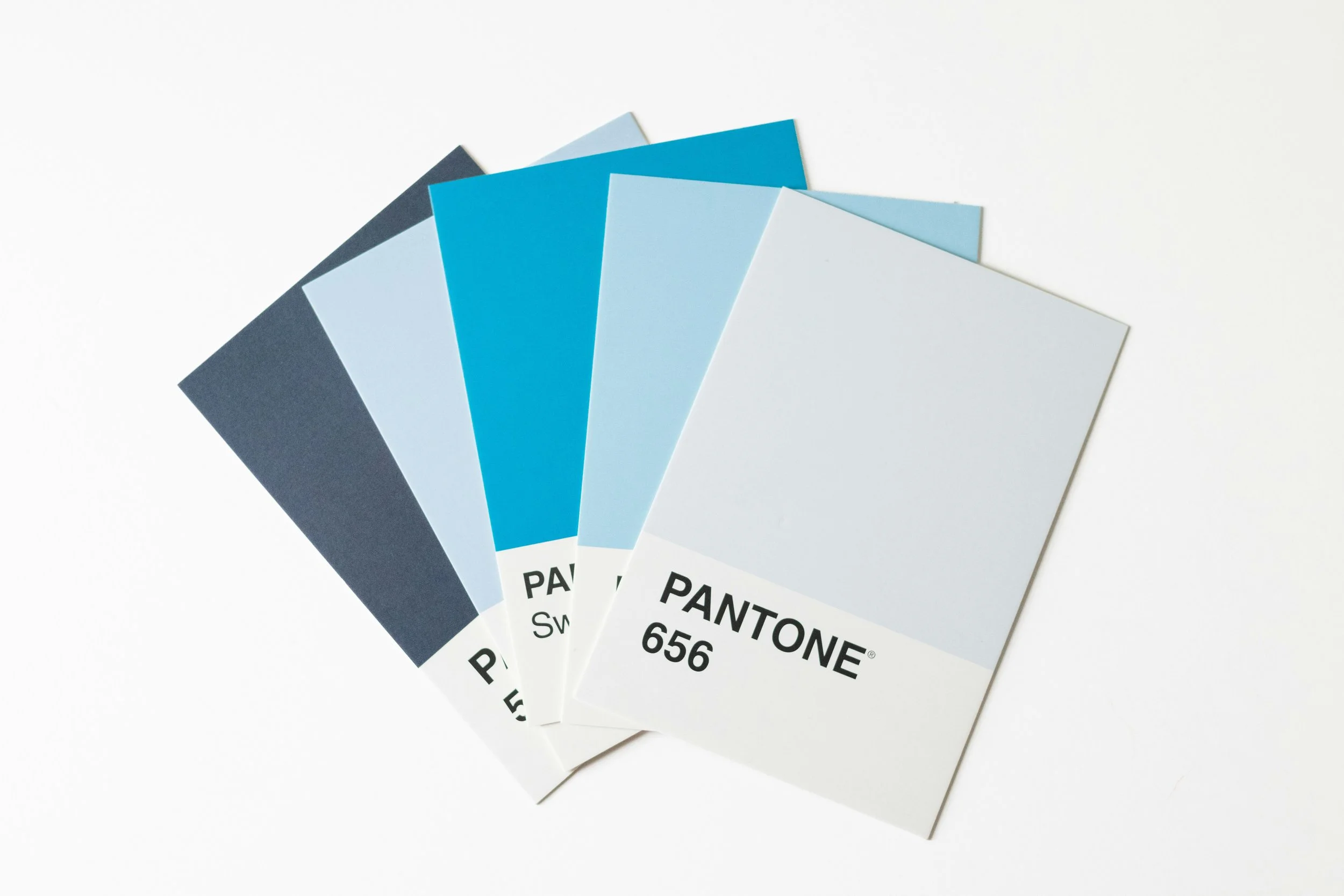
Colour is one of the fastest ways a business communicates its personality. A considered palette of two to four colours, with clear primary and secondary uses, creates immediate visual recognition and gives your brand a consistent presence across every application. Colour also carries psychological weight: the tones you choose signal warmth, trust, energy, premium quality, or accessibility before anyone has read a word.
Typography
The fonts you use are part of your brand's personality. A bold geometric sans-serif communicates something different from an elegant serif, and both communicate something different from a playful display font. Typography choices need to be legible across digital and print contexts, consistent in how they're applied, and aligned with the overall tone of the brand.
Brand voice
Brand voice is how your business communicates in words. It covers tone, vocabulary, sentence structure, and the overall feeling of your written content. A business with a clear brand voice sounds the same in a formal proposal as it does in an Instagram caption, because both are guided by the same underlying sense of who the business is and how it speaks. Without a defined voice, written content defaults to whoever's writing it on the day, and consistency suffers.
Visual style and imagery
The way your business uses photography, illustration, icons, and graphic elements is part of your brand identity. A consistent image style, whether that's high-contrast photography, clean flat illustration, or raw behind-the-scenes content, builds visual recognition and reinforces the personality of the brand.
Brand guidelines
Brand guidelines are the document that holds all of the above together. They set out exactly how each element should be used, in what contexts, and with what rules. Without guidelines, a brand identity slowly drifts: fonts get swapped, colours get approximated, the logo gets stretched. With guidelines, the business can maintain consistency whether it's the founder producing content or someone else entirely.

Why does brand identity matter for small businesses?
The most common objection to investing in brand identity is that it feels like something bigger businesses do. The reality is the opposite. For a small business competing against more established names, brand identity is one of the few tools available to level the playing field at a glance.
A well-built brand identity signals credibility before a conversation has started. It tells a potential client that the business takes itself seriously, that it has thought about who it is and who it's for, and that the quality of the work is likely to reflect the quality of the presentation. For a new business without a long track record, that signal is often the difference between getting the enquiry and being passed over.
For an established business, brand identity is what allows growth to happen without losing coherence. A business that has been running for five years on the back of personal reputation and word of mouth will hit a ceiling. The brand identity is what allows it to grow beyond that ceiling by giving new audiences a way to assess and trust it before they've met the founder.
Strong brands also generate measurably better commercial outcomes. Research from Millward Brown found that strong brands generate triple the sales volume of weaker brands and can command a price premium over competitors in the same category.
How do you build a brand identity as a small business?
Building a brand identity isn't a single task. It's a process that moves from strategic thinking through to visual execution and finally to application. The order matters. Businesses that start with the logo and work backwards tend to produce something that looks fine but doesn't hold together as a system, because the visual decisions weren't grounded in strategic ones.
Step 1: Define your positioning
Before anything visual happens, you need to be clear on who the business is, what it does, who it's for, and what makes it the right choice over everything else available. This is brand positioning, and it's the foundation everything else is built on. If you can't answer those questions clearly and specifically, no amount of good design will compensate for the lack of clarity underneath it.
Step 2: Know your audience
Brand identity is not about what you like. It's about what resonates with the specific people you're trying to reach. Understanding your audience, their values, their expectations, the visual and verbal language they respond to, is what allows you to build a brand that speaks to them rather than at them. A brand built without a clear sense of audience tends to end up generic, because it's trying to appeal to everyone.
Step 3: Build your visual identity
Once the strategic foundation is in place, you can make meaningful visual decisions. Logo, colour palette, typography, and imagery style all need to be chosen in relation to each other and in relation to the positioning. A visual identity where all the elements feel cohesive and intentional reads as professional. One where they've been chosen independently of each other reads as assembled.
Step 4: Define your brand voice
Write down how your business communicates. What words do you use? What words do you avoid? Is the tone formal or conversational? Direct or warm? A simple one-page voice guide that captures these decisions gives anyone writing for the business a consistent point of reference.
Step 5: Create your brand guidelines
Bring everything together into a document that sets out exactly how each element of the brand should be used. This doesn't need to be a 60-page PDF. For a small business, a clear, well-organised single document covering logo usage, colour values, typography choices, voice principles, and imagery guidelines is sufficient.
Step 6: Apply it consistently
Brand identity only works through consistent application over time. A brand that looks and sounds the same across every touchpoint, every month, every platform, builds recognition. One that drifts or gets applied inconsistently starts to erode the trust it was built to create. The guidelines exist to make consistency the default, not the exception.
What's the difference between a logo and a brand identity?
A logo is a single element. A brand identity is the system it lives within. The logo tells people what the business is called. The brand identity tells them what kind of business it is.
A business can have a logo without a brand identity. What it can't do is build consistent recognition, trust, or presence without one. A logo on its own is a starting point. A brand identity is the foundation the whole business communicates from.
Does a small business need a professional to build its brand identity?
Not necessarily, but the honest answer is that getting it right takes more than access to design software. The strategic thinking that should underpin every visual decision, the ability to make a colour palette, typography set, and logo feel like a coherent system rather than a collection of separate choices, and the skill to produce assets that work across every context are things that take time and experience to develop.
DIY branding tools and templates can produce something that looks reasonable quickly. What they can't do is produce a brand identity that's built around the specific positioning, audience, and personality of a particular business. The result tends to look like other businesses using the same templates, which is the opposite of what brand identity is supposed to achieve.
For a business at the point where brand identity genuinely matters, whether that's at launch or at the point where the current brand has stopped doing its job, working with a studio that understands the strategic as well as the visual side of the work produces something with considerably more longevity.

Frequently asked questions
What is brand identity in simple terms? Brand identity is the system of visual and verbal elements that defines how your business looks, sounds, and feels to your audience. It includes your logo, colours, typography, imagery style, and brand voice, and it governs how all of those elements are used consistently across every touchpoint.
What's included in a brand identity? A complete brand identity typically includes a logo and logo variations, a colour palette, typography choices, imagery style guidelines, brand voice principles, and a set of brand guidelines that set out how everything should be applied.
How long does it take to build a brand identity? For a small business working with a professional studio, a brand identity project typically takes four to eight weeks from start to final delivery. The timeline depends on the scope of the project, how clearly the brief is defined at the outset, and how quickly decisions can be signed off.
Can I build a brand identity myself? You can, but the results tend to be limited by the tools you're using and the strategic thinking behind the visual decisions. DIY tools produce something that looks similar to other businesses using the same tools. A professionally built brand identity is specific to your business's positioning, audience, and personality.
How is brand identity different from branding? Branding is the broader process of building how people perceive your business, including experience, reputation, and communication over time. Brand identity is the visual and verbal system that branding is built from. One is the output; the other is the ongoing process of using that output to shape perception.
When should a small business invest in a brand identity? The best time is before launch, because it means every piece of communication from day one is consistent and credible. The second-best time is when the current brand no longer reflects the quality or direction of the business, which tends to happen around the five-year mark for most growing small businesses.
If any of this has you thinking about your own business or where to take things next, feel free to get in touch.
Visit our contact page, and we will reach out shortly.